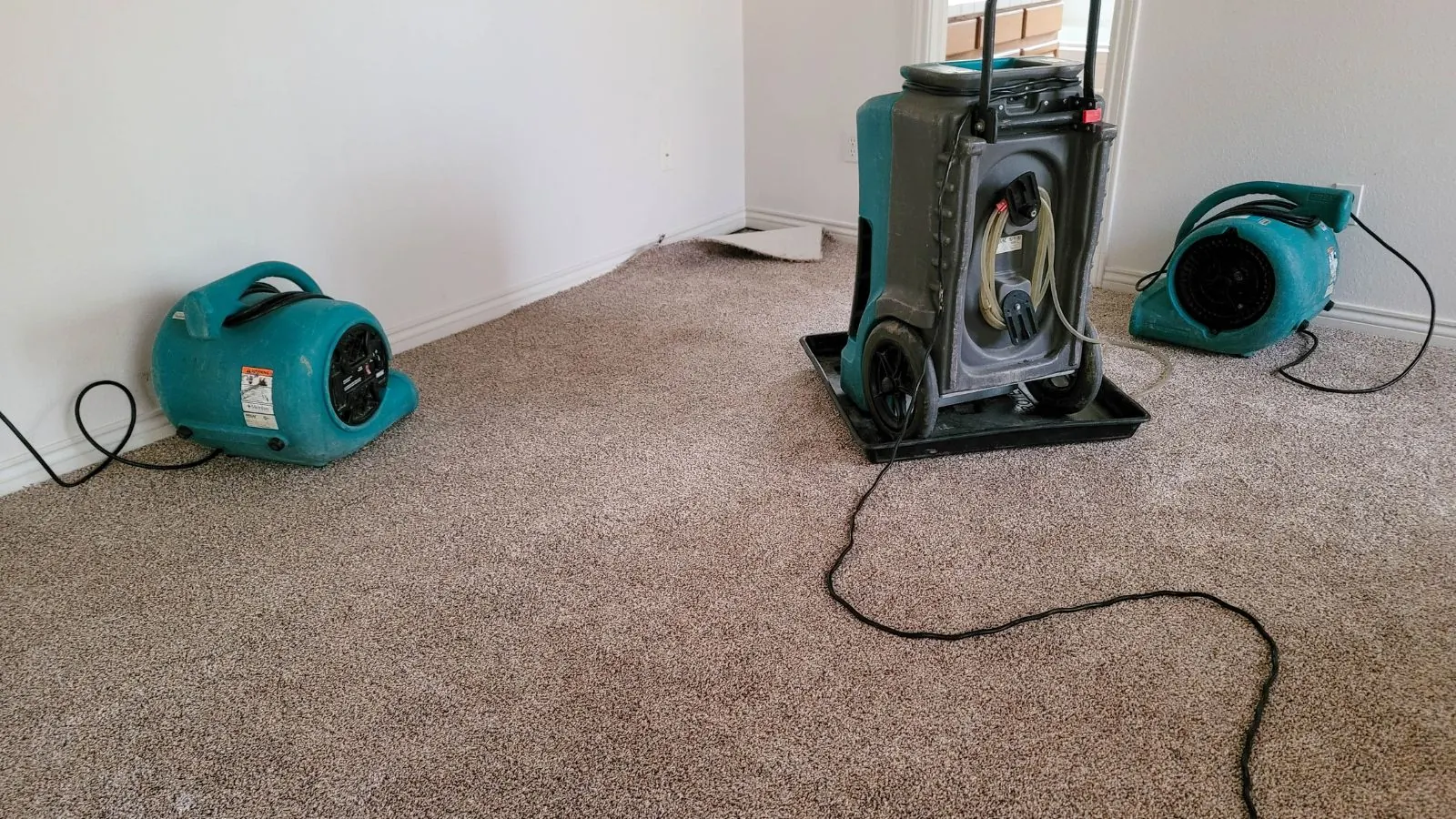
Structural drying and dehumidification is the stage that removes the moisture left in floors, walls and framing after the standing water is gone. Our 24/7 line is open, including nights, weekends and holidays, and we offer same-day response when available.
While you wait, keep the thermostat at a normal setting, leave wet cabinets and baseboards alone, and keep the area clear. Do not seal wet rooms with plastic or run the heat hard against wet walls.
What drying actually means
Water leaves a material by evaporating into the air. That air then has to be removed or the room just trades one kind of wet for another. Drying is the work of moving moisture out of the structure and out of the building.
Three things control the speed: temperature, humidity and airflow. Warm air holds more moisture. Dry air pulls more from wet surfaces. Moving air keeps fresh dry air in contact with those surfaces. A drying plan balances all three.
Grains per pound
Humidity is tracked as grains of moisture per pound of air. It is a better working number than a relative humidity reading because it does not swing as the temperature changes. We log it at the dehumidifier inlet and outlet, and in the room, to see whether the equipment is removing water.
Why a store-bought fan falls short
A household fan moves air across the top of a surface. It does not remove the moisture it picks up, and it does nothing for wet cavities. Without a dehumidifier the water goes back into drywall and flooring. We do not rent equipment, because the readings and the placement are what make it work.
Signs the structure is still wet
Dry to the touch is not dry to a meter. Here is what owners often notice.
| What you see or smell | What it can mean |
|---|---|
| Baseboards cool or damp after the floor looks dry | Moisture is still in the wall cavity behind the trim |
| Musty smell that returns each morning | Materials are holding water and humidity is high |
| Windows fogging in a closed room | Moisture in the air has nowhere to go |
| Cupping or lifting floorboards | Subfloor or flooring is still taking on or releasing moisture |
Safety steps while drying equipment runs
Drying equipment runs for days, so set up the house with that in mind.
- Do not unplug or move equipment cords. Power must stay on circuits that are safe and not wet.
- Keep children and pets away from air movers and dehumidifier outlets.
- If water is still active, shut off the supply at the main valve. A plumber repairs the source.
- If you see sparks or smell burning, shut off the breaker and call 911.
- For a gas smell, leave and call the gas utility and 911.
- Do not stand in water near outlets, power strips or extension cords.
How we dry a structure
The standing water should already be out. If it is not, emergency water removal comes first. Drying begins once that is done.
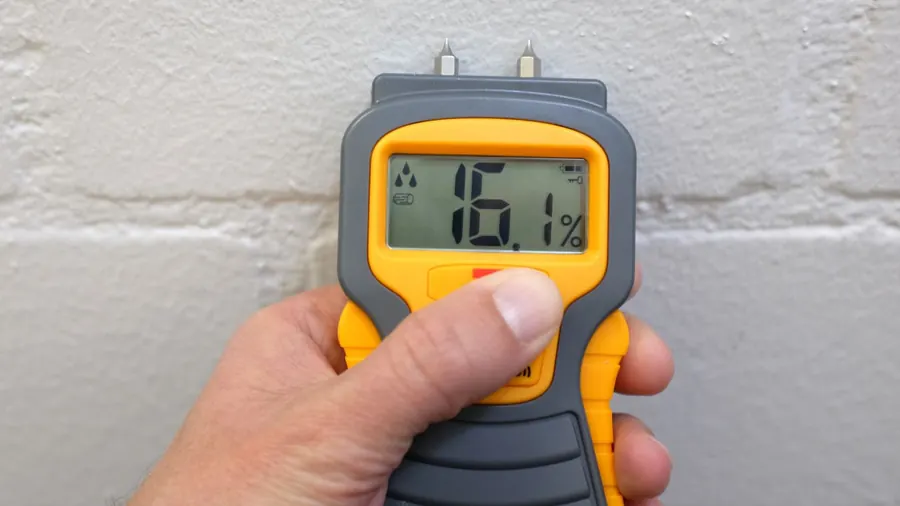
- Map the moisture. A thermal camera shows cool, wet areas. Moisture meters confirm the reading in drywall, wood framing and subfloor.
- Set a dry reference. We measure unaffected material in the same home. That number becomes the goal for the wet material.
- Place air movers. Air movers go along walls and across floors at angles that sweep air over wet surfaces. Placement changes as the readings change.
- Add dehumidification. LGR dehumidifiers handle most home jobs. Desiccant dehumidifiers can help in cool conditions or very low humidity targets.
- Dry the cavities. Small ports or removed baseboards let us push air into wall cavities. Injectidry systems and floor mats do the same for floors and under cabinets.
- Contain and protect. Plastic sheeting keeps moisture in the work zone. HEPA air scrubbers clean air if materials were opened or disturbed.
- Read and record daily. Every visit we log temperature, humidity, grains per pound and material readings, then adjust the equipment.
When the equipment stops
Drying ends when readings meet the dry reference, not when a fixed number of days has passed. If a material will not dry, we say so and explain what has to come out. Industry practice under ANSI/IICRC S500 ties drying goals to documented readings, and we follow that approach.
We remove the equipment only after the final readings are recorded. That log also gives you something concrete to show an adjuster.
Still damp after the water stopped? Share how long the area has been damp.
☎ (972) 945-2885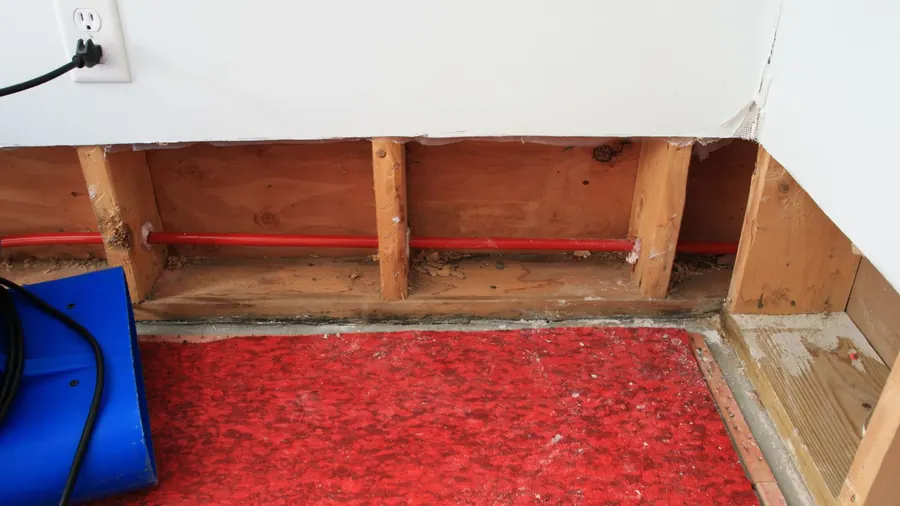
Why the season and thermostat matter in Addison
North Texas summers run the air conditioner for long stretches. If the thermostat is set low, the cooler air holds less moisture and drying slows. We may ask you to hold the house at a moderate setting so the equipment can work.
Winter is different. The National Weather Service reports that the DFW Airport station averages about 29 freezes per season, and cold structures dry slowly. Keep heat on during drying after a freeze loss. Frozen pipe water damage covers that kind of loss in full.
What changes the cost
Drying is priced from the conditions on site. These factors matter most.
Wet volume
The cubic feet of air and the surface area of wet material set the equipment count.
Material type
Hardwood, plaster, concrete and insulation hold water longer than basic drywall.
Wet cavities
Walls and floors that need ports or mats add setup time.
Duration
The number of monitoring visits depends on how fast readings fall.
Insurance and drying records
Insurers generally look at whether the loss was sudden, what water category applied and what was done about it. Policies differ, so ask your agent or adjuster how your policy treats drying costs and equipment time.
Keep photos from day one. Our daily logs show the starting moisture, the drying equipment used and the final readings. That shows the work was needed and finished.
What this means in Addison
NWS Fort Worth lists average annual precipitation at DFW Airport as 37.01 inches for 1991 to 2020. That is the airport station, not Addison itself, but it shows a climate where rain and humid air are regular visitors.
The Town of Addison requires permits for wall removal or additions. If drying shows a wall must come down, check with Town Development Services first. Contractors must register with the Town before starting a project.
Texas Department of Insurance notes mold can start growing within a day after a leak, which is why prompt drying matters. A licensed remediator handles larger mold, and mold remediation is its own service.
Source type: NWS Fort Worth, Town of Addison Development Services and Texas Department of Insurance
Mistakes to avoid
- Turning the equipment off because the room feels dry.
- Closing the house and blocking vents while dehumidifiers run.
- Moving air movers to make room for furniture without telling the crew.
- Opening windows on a humid day while the dehumidifiers are working.
Once the structure is dry, water damage repair covers the rebuild.
Where we work
We dry homes in Addison and nearby Plano and Coppell. For the full picture of the early stages, see water mitigation.
Frequently asked questions
Yes. Dispatch is open 24/7, including nights, weekends and holidays, with same-day response when available. While you wait, keep the thermostat steady, leave wet cabinets and trim in place, and photograph the damage. The sooner drying equipment is running, the less moisture reaches framing and flooring.
It depends on the material, the amount of water and the conditions. Many jobs run several days, with readings taken at each visit. We stop when the meter numbers reach the dry reference, not on a set date. If a material will not respond, we tell you early.
Dehumidifiers release heat as they remove moisture, so the room warms up. Air movers add steady noise. Both are normal and both help drying.
Often yes when the water was clean and caught early. Insulation, soaked carpet pad and contaminated materials usually come out. Hardwood and subfloor depend on how long they were wet and what the meters show.
No. We do not offer equipment rental. Drying works because someone sets the equipment, reads the moisture daily and adjusts it. Our crews run the whole process and document the result.
Floors dry to the touch but walls still read wet? Dispatch can explain next steps.
☎ (972) 945-2885