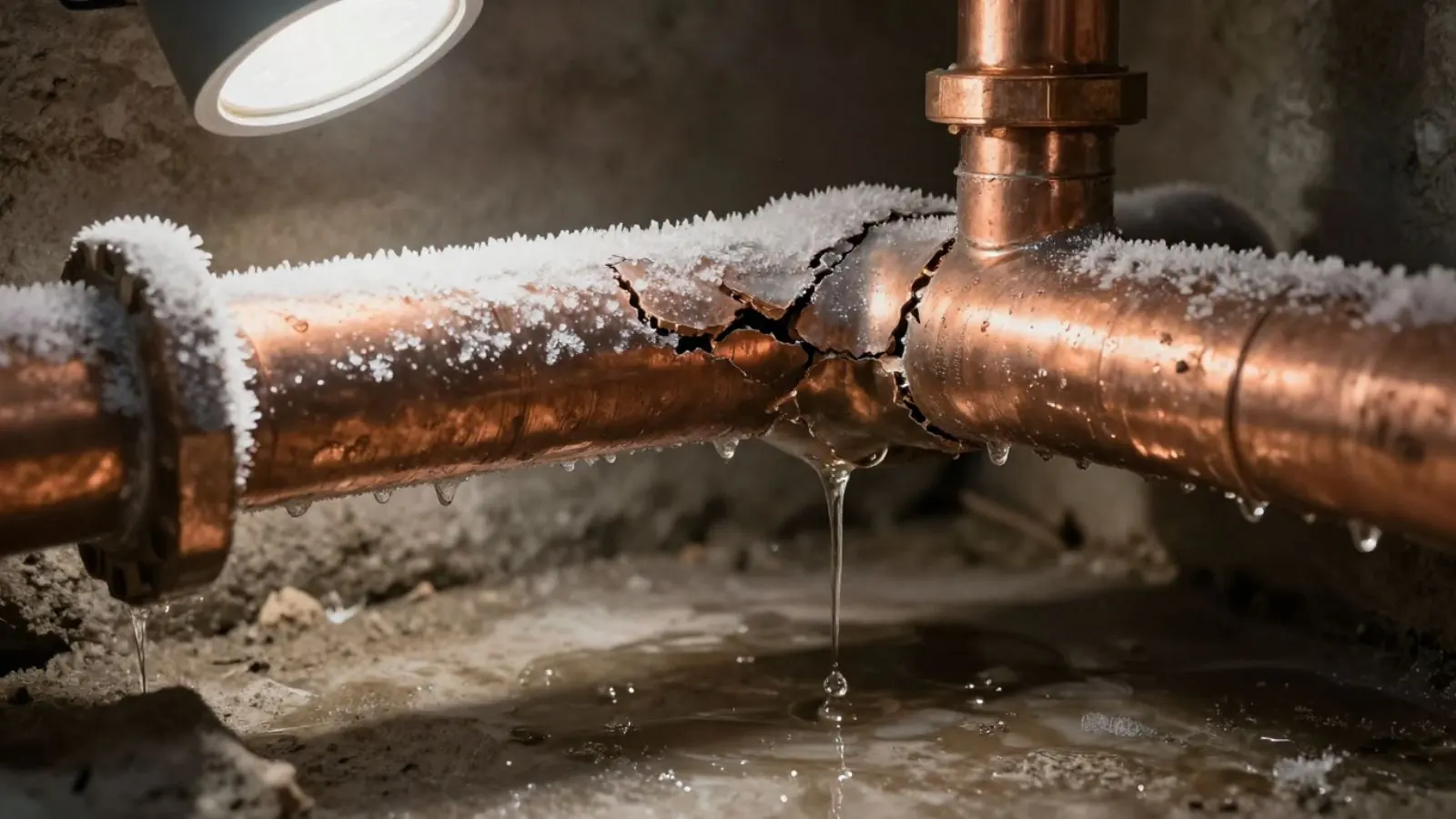
Frozen pipe water damage in Addison tends to reveal itself after the thaw, when the ice that was plugging a split pipe turns back into running water. Our 24/7 line is open, including nights, weekends and holidays, and we send a crew same-day when one is available.
While you wait, keep the heat on, keep people away from any ceiling that is bulging or dripping, and leave lights and outlets in the wet area switched off until the power has been checked.
Why a freeze becomes a flood after the thaw
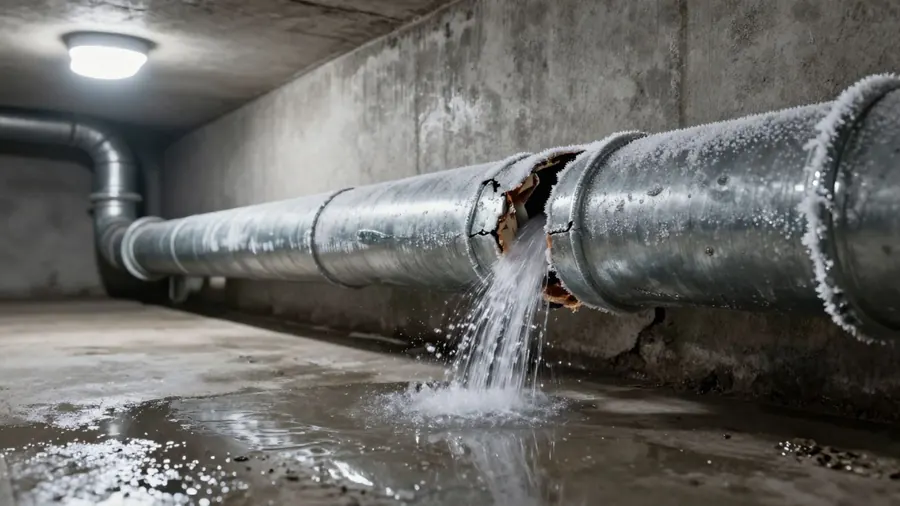
Water expands as it turns to ice. That pressure can split a pipe or push a fitting apart, but the crack often stays sealed by the ice itself. The flooding starts when the temperature climbs and the plug melts. A quiet house at midnight can have water running inside a wall by noon.
Where the split happens depends on how your home is built. If a supply line runs through an exterior wall, an attic, an unheated garage or a crawl space, it has less warmth around it than a line in an interior wall. Outdoor hose bibs and irrigation lines can crack too, then leak back toward the house once the pipe thaws.
Rooms that were left unheated
A closed-off bedroom or a second home left empty during a cold week can lose enough heat for pipes to freeze. Water often soaks the insulation beside the pipe, and wet insulation holds moisture against framing for a long time.
What you notice after a thaw and what it usually means
| What you notice | What it usually means |
|---|---|
| A ceiling stain that spreads once the weather warms | A supply line in the attic or upper wall has thawed and is leaking into the cavity above. |
| A faucet that only trickles during the cold | Ice may still be blocking a line, and a split may be hiding behind the blockage. |
| The sound of running water with every fixture off | A pipe is open somewhere in a wall or floor and water is moving. |
| Wet baseboards or a damp patch low on an exterior wall | Water has run down inside the cavity and is wicking into drywall and trim. |
| A musty smell in a room you have not used | Damp insulation or drywall has been sitting wet for a day or more. |
First-hour safety steps
Water and wiring share the same walls in a freeze loss, so safety comes before cleanup.
- Close the main water valve at your house if you can reach it. If the inside valve is stuck, call the Town rather than forcing the meter.
- If water is near outlets, light fixtures or the panel, turn off power only if you can reach the breaker without stepping through water. Otherwise stay out and call an electrician or 911.
- Stay out from under a ceiling that is bowed, sagging or dripping heavily. Trapped water can drop all at once.
- Never use a torch, open flame or heat gun to thaw a pipe.
- If you smell gas, leave the house and call the gas utility or 911 from outside.
A plumber repairs or replaces the split pipe. We handle the water that came out of it.
How we dry a freeze-related loss
Our work starts once the water is stopped, and it follows industry practice under ANSI/IICRC S500.
- Scope with a thermal camera and meters. We scan walls, ceilings and floors, then confirm with moisture meters. Melt water often travels farther than the stain suggests.
- Extract standing water. Truck-mount and portable extractors pull water from carpet and hard floors. Our emergency water removal page covers that stage in more detail.
- Open what cannot dry closed. Wet insulation comes out. Drywall that is soaked or sagging gets a flood cut above the wet line, and we leave the cavity open for airflow.
- Dry the cavity and the room. Air movers, LGR dehumidifiers and injectidry cavity drying ports move moisture out of framing. The structural drying page explains how that equipment is set up and read.
- Keep the heat on, then document. Warm air holds more moisture, so keep a normal thermostat setting while equipment runs. We return with meters until framing matches a dry reference reading, then give you photos and readings for your adjuster.
This is the same sequence behind our water mitigation service, adjusted for cold-weather losses.
Pipe split after a freeze? Tell the dispatcher which rooms were cold.
☎ (972) 945-2885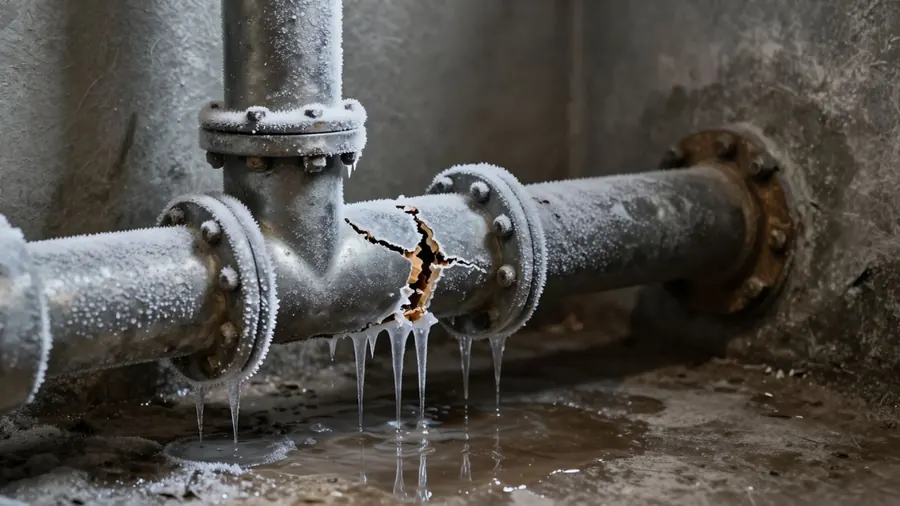
What changes the cost
Every freeze loss differs, so we name no figure before seeing the structure. These factors move the scope.
Rooms and floors touched
Water that ran through an attic and two floors needs more drying than a single wall.
Where the pipe split
A line in an attic, an exterior wall or a garage ceiling leaves different damage and different access.
What the water soaked
Insulation, carpet and pad, hardwood and drywall each dry or fail differently.
Drying duration and equipment
More wet material means more air movers and dehumidifiers running for more days.
How insurance usually views a freeze loss
Many policies treat a sudden burst differently from slow, ongoing seepage. A pipe that split in the freeze and flooded a wall tends to fit the sudden category. A drip nobody noticed for weeks may not. Policies differ, so ask your agent or adjuster how yours reads.
Document before cleanup. Take wide photos of each room, close photos of the split pipe and the wet materials, and note the date and the cold snap. Keep the plumber's invoice describing the failure. We add moisture readings and a drying log.
What this means in Addison
The National Weather Service in Fort Worth describes the February 2021 winter event as two stretches at or below freezing, lasting 93 hours and 139 hours. Plumbing that rarely sees cold like that was tested for days.
At the DFW Airport station, the 1991 to 2020 normals put the usual span between spring and fall freezes at roughly March to November, with about 29 freezes in a typical season. That is the airport and not Addison itself, but it shows how often North Texas pipes meet a hard night.
The Town of Addison says it is available on an emergency basis to shut off water for a leak or a burst pipe, and it recommends turning sprinklers off when a freeze is forecast. Irrigation lines are easy to forget.
Source type: National Weather Service Fort Worth and Town of Addison inclement-weather, utilities and Development Services pages
Mistakes to avoid and what to do before the next freeze
- Turning the heat down to save money while the house is wet.
- Waiting to see whether a stain grows. The Texas Department of Insurance notes that mold can start growing within a day after a leak.
- Drying only the surface with a household fan.
- Assuming a thawed pipe is a fixed pipe. Have a plumber check the line.
- Skipping prevention: disconnect hoses, turn sprinklers off, open cabinet doors on exterior walls and let a faucet drip when a hard freeze is forecast.
If visible growth does appear, see our mold remediation page for the next step. We work the same way for homes in Carrollton and Plano, which share the same cold fronts.
Frequently asked questions
Yes. Calls are taken overnight, on weekends and on holidays, and same-day response is offered when available. Call as soon as the water is stopped. While you wait, keep the heat on, stay out of rooms with sagging ceilings and photograph what you can see safely.
No. A plumber repairs or replaces the pipe. We extract water, dry the structure, remove materials that cannot be saved and document the loss. It helps when the plumber stops the leak first, but call us right away if water is still spreading, and we will plan around the repair.
Yes. Keep the thermostat at a normal indoor setting. Warm air carries moisture away faster, and it protects the remaining pipes from freezing again. Dehumidifiers work against humidity, so a cold house slows the job. If your power is out, tell us when you call so we can plan around it.
Usually not. Wet insulation holds water against framing and drywall and dries slowly. We remove soaked insulation, dry the cavity and leave replacement to you or a contractor. Insulation above or beside the wet area can sometimes stay if the meters read normal, and we check before deciding.
Not sure whether a thawed pipe is still leaking? The dispatcher can sort that out by phone.
☎ (972) 945-2885