Commercial water damage restoration covers water losses in a suite, a floor or a whole building, from a burst line to a roof leak. The line stays open overnight and on holidays, and same-day response is offered when available.
While you wait, keep people out of wet areas, shut off the water if you can do so safely, and move valuables and records to dry ground. Call the property manager or building engineer so someone can reach the main shutoff.
How water moves through a commercial space
Water in a commercial property rarely stays where it started. It runs along floors, drops through ceiling tile and follows pipe chases and electrical openings. A leak on one floor can soak a suite below it and the corridor beside it.
Commercial finishes behave differently from a house. Suspended ceiling tile, metal studs with drywall, carpet tile over concrete and insulation in wall cavities each react to water in their own way. Some can be dried. Others have to come out.
Common sources
Supply lines, sprinkler or fire line discharge, roof drains, HVAC condensate, restroom overflows and storm water can all be the start. A plumber, roofer or building engineer repairs the source. We handle the water, the materials and the drying.
Why time matters more in a shared building
Wet materials in one suite can affect neighbors. Humidity moves through shared ceilings and walls. The sooner water is out and drying begins, the smaller the area that needs work.
What you see and what it usually means
These signs help you describe the loss when you call.
| What you notice | What it usually means |
|---|---|
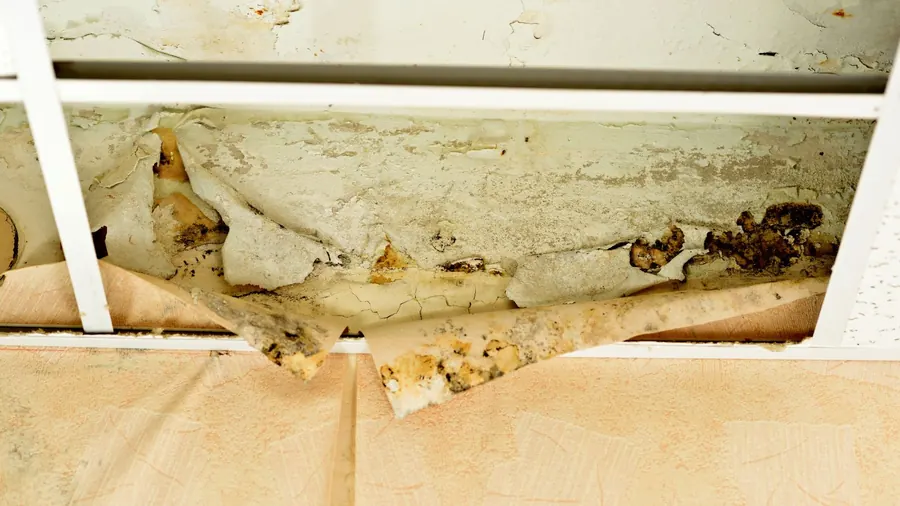
| Stained or sagging ceiling tile | Water is above the tile, in the plenum or in an insulated cavity |
| Carpet tile that is damp or curling at the edges | Water has reached the adhesive layer or the slab |
| Bubbling paint or soft drywall near the floor | Water is wicking up the wall board from the base |
| Musty smell in a closed suite | Materials are staying wet and humidity is high |
First-hour safety steps
Commercial spaces have more electrical and mechanical systems than most homes, so slow down.
- Keep everyone out of areas with standing water near panels, outlets or equipment.
- Locate the water main with your property manager or building engineer and shut it off if you can do so safely.
- Do not touch wet electrical gear. Call 911 for sparks, smoke or any shock risk.
- If you smell gas, leave and call the gas utility and 911.
- Do not use the elevator if water is near the shaft or machine room.
- If the water came from a sewer or restroom overflow, treat it as contaminated and keep people away.
Photograph the source, the water and the damage before anything is moved. Note times and who you spoke to.
Our commercial restoration process
Every building is different, so the first step is always a walk-through.
- Scope the loss. We walk the space with your property manager, check where the water traveled and agree on a plan and the order of work.
- Extract standing water. Truck-mount and portable extractors pull water from carpet, hard floors and low areas. For more on the extraction stage, see emergency water removal.
- Map moisture. Thermal cameras and moisture meters show wet areas on walls, ceilings and slabs. We record readings room by room.
- Remove wet finishes. Ceiling tile, drywall, carpet tile and insulation that cannot dry are cut out and removed. Flood cut tools keep the cut lines clean.
- Dry and monitor. Air movers and LGR dehumidifiers run until readings meet a dry reference. The method is covered on our structural drying page.
- Clean and document. Surfaces are cleaned, HEPA air scrubbers filter the air if materials were opened, and we assemble photos and readings in a plain report.
Industry practice under ANSI/IICRC S500 guides how drying is documented, and that is how we keep records.
Working in phases
A building cannot always shut down. Where the layout allows, we can work in phases, sealing off the wet area with containment so the rest of the space stays usable. Whether that works depends on the size of the loss, the water category and how the space is laid out.
We will tell you plainly what is practical. A clean-water leak in one room is easier to separate than contaminated water that spread across a floor.
Water loss in a commercial space? Share the size of the affected area.
☎ (972) 945-2885
Coordinating with property managers
We work with your property manager or building engineer on access, shutoffs, after-hours entry and notice to other occupants. One point of contact on your side keeps the work moving.
Who pays for what depends on the lease and the insurance policy. Ask your lease and your insurer about tenant and owner responsibility before assuming either way.
What changes the cost
Commercial scopes vary widely. These factors shape the job.
Affected area
The number of rooms, floors or suites touched by water.
Water category
Clean water, gray water and sewage need different handling.
Finishes and materials
Ceiling tile, carpet tile and insulation differ in what can be saved.
Access and phasing
After-hours work and containment add time.
Drying duration
Equipment count and monitoring visits depend on readings.
Insurance and commercial losses
Commercial policies are written in many ways, and coverage for water damage, sewer backup, flood and business interruption can differ. Policies differ, so ask your agent or adjuster which parts apply.
Sudden losses and gradual ones are often treated differently. Keep photos, moisture logs and invoices together. We provide readings and notes in a format a property manager or insurer can read.
What this means in Addison
The Town of Addison requires contractors to register before starting a project, and the license holder stays responsible for the work. Permits and inspections run through the Town's Citizen Self Service portal.
Plumbing work such as replacing water or sewer lines needs a permit. The Town adopted the 2024 International Residential Code and 2024 International Plumbing Code, with amendments, for permits submitted on or after June 1, 2024. Ask Building Inspection what applies to your repair.
NWS Fort Worth notes that large hail, damaging winds, flooding and tornadoes occur nearly every year across the metroplex, with severe weather peaking in spring.
Source type: Town of Addison Development Services and NWS Fort Worth
Mistakes to avoid
- Waiting for the insurer before drying begins.
- Leaving wet ceiling tile and insulation in place.
- Running heat or air without checking how it affects humidity.
- Throwing away damaged items before they are photographed.
- Skipping a conversation with the property manager about shutoffs and access.
If standing water came from a major storm, flood damage restoration explains how that kind of loss is handled. After drying, water mitigation explains how the early steps fit together.
Where we work
We serve Addison and nearby Richardson and Carrollton. Call the same line for each.
Frequently asked questions
Yes. Calls are answered through the night, and same-day response is offered when available. While you wait, keep people out of wet areas, shut off the water if you can do so safely, and photograph the damage. Call your property manager so we can coordinate access.
Sometimes. Where the layout allows, we can use containment to separate the wet area from the rest of the space. It depends on the size of the loss and the water category. We discuss what is practical at the walk-through.
That depends on the lease and the insurance policies involved. Ask your lease and your insurer. We provide documentation of the work and readings so the right party can review the loss.
We provide dated photos, moisture readings, a description of the work and the equipment used, and the final readings that show the structure reached its dry goal. The records are written plainly so a non-specialist can follow them.
No. A plumber repairs pipes, a roofer repairs roofs, and an engineer handles structural questions. We extract water, dry the structure, remove wet finishes, clean and document. For the rebuild, see water damage repair.
Managing a building with a wet suite? The dispatcher can explain how a scope is written.
☎ (972) 945-2885