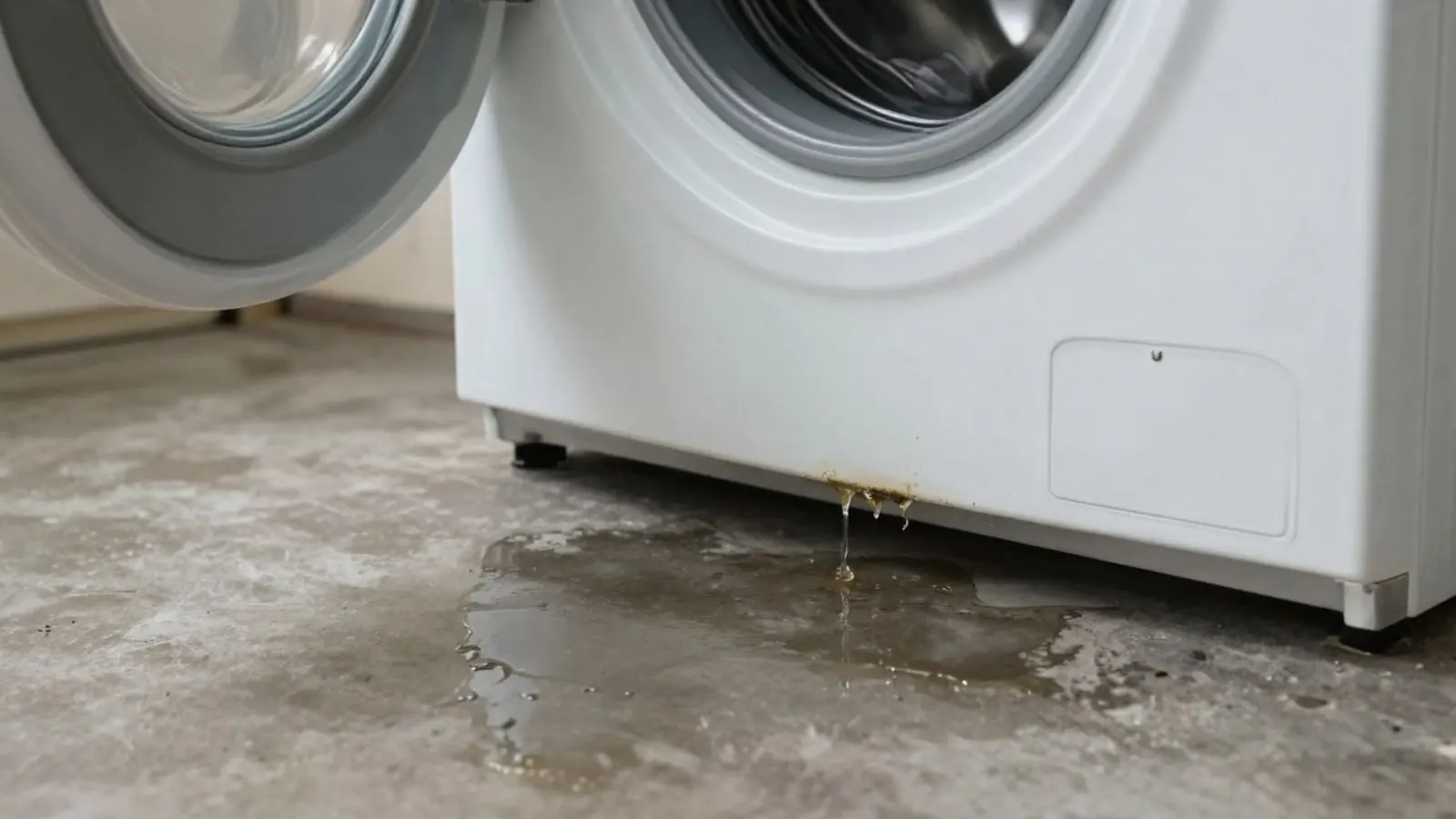
Appliance leak water damage starts when a washer, dishwasher, refrigerator or disposal lets water out where it was never meant to go. Our 24/7 line is open, so you can call at any hour and we will talk you through what to do next.
While you wait, unplug the appliance only if the floor around it is dry, and close its supply valve. If water is near an outlet or you cannot tell, leave the power alone and shut the breaker for that room from the panel.
Why the failed appliance changes the damage
A leak is not just a wet floor. Where the water came from tells us how far it traveled, how clean it was and how long it sat. A burst supply hose under pressure floods a room in minutes. A tired door seal can drip for weeks and leave a rotten subfloor behind.
In North Texas homes the laundry closet, the dishwasher alcove and the fridge nook are often tucked against interior walls and cabinets. Water that escapes there runs under flooring and into wall bases where you cannot see it.
Washing machines
Supply hoses, drain hoses and overflow from a clogged standpipe are the usual culprits. If your laundry room is upstairs, water can drop through the ceiling below. In a condo or apartment building, it may reach a neighbor's unit too.
Dishwashers, fridges and disposals
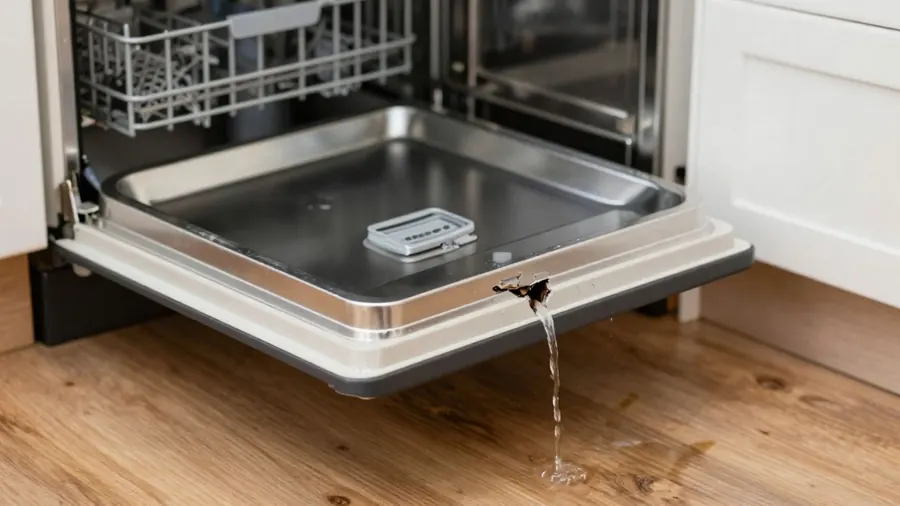
A dishwasher can leak at the door seal, the drain line or the inlet valve. A refrigerator or ice maker line drips behind the unit for days before anyone sees it. A disposal leaks from its seals and drain connections into the sink base.
What you see and what it usually means
Match the sign to the likely source before you call. It helps us plan what to bring.
| What you notice | Likely source | What we check |
|---|---|---|
| Puddle at the front of the dishwasher | Door seal or drain hose | Subfloor and toe kick edges |
| Damp wall behind the washer | Supply hose or drain standpipe | Drywall base and insulation |
| Musty smell near the fridge, floor lifting | Slow ice maker or supply line leak | Flooring seams and the wall behind |
| Stain on the ceiling under a laundry room | Overflow or hose burst upstairs | Ceiling cavity and floor above |
| Wet cabinet base under the sink | Disposal or drain connection | Cabinet floor and adjacent wall |
These are common patterns, not a diagnosis. We confirm with moisture readings.
First-hour safety steps
Do these in order, and stop at any step that feels unsafe.
- Close the supply valve behind or beside the appliance. If it will not turn, shut the home's main water valve instead.
- Keep out of standing water if any cord, outlet or power strip is wet. Switch off the room's breaker from a dry spot.
- If your inside valve is stuck, call the Town of Addison. Only an authorized agent may work the water meter.
- Call 911 for sparking, a burning smell or anyone shocked. Call the gas utility if you smell gas near a gas dryer or range.
- Move rugs, boxes and electronics to dry ground and take photos before you touch anything else.
Which water is it
A clean supply line leaks water that started clean. A dishwasher or washer drain carries food, soap, lint and bacteria, so that water is treated as contaminated. We sort this out first because it decides whether carpet pad, baseboard and drywall can be dried or have to come out.
Appliance leaked onto the floor? Name the appliance that leaked.
☎ (972) 945-2885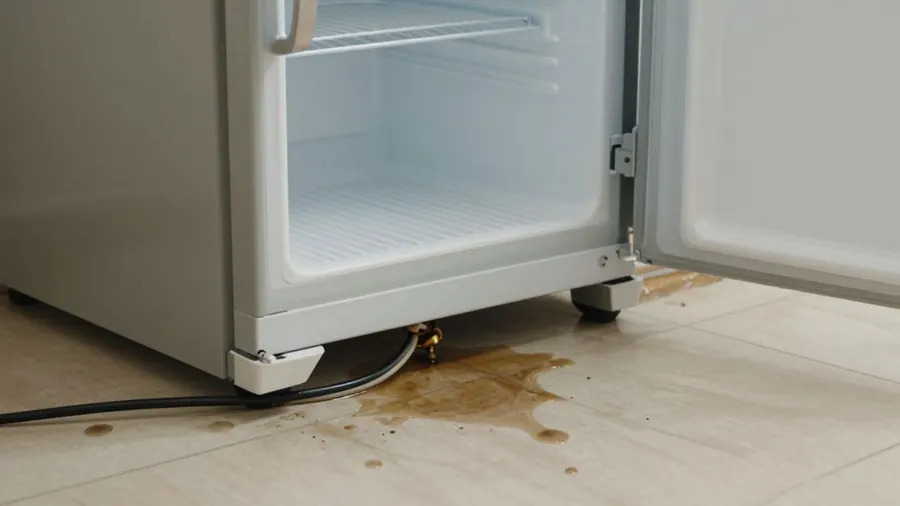
Our process after an appliance leak
We follow industry practice under ANSI/IICRC S500, and we start with measuring.
- Find the wet area. We use moisture meters and a thermal camera to map how far the water went past what you can see.
- Extract. Portable extractors pull standing water and soaked carpet pad out. Bigger spills get a truck-mount unit.
- Open what cannot dry. We pull toe kicks and baseboards, and cut wet drywall or flooring when drying in place would not work.
- Dry. Air movers and LGR dehumidifiers run until readings match a dry reference. Wall cavities can get cavity drying.
- Clean and document. We clean affected surfaces, treat contaminated areas and record readings and photos for your adjuster.
If the water reached a cabinet run, our kitchen water damage page explains that side. A failed tank is a different job, covered under water heater leak cleanup.
What changes the cost
Every job is priced from the scope, so these are the factors.
Water category.
Clean supply water is simpler than washer or dishwasher drain water.
Area and materials.
Tile, laminate, hardwood and carpet each dry differently.
Time since the leak.
A slow seep that ran for weeks usually means more removal.
Access.
Cramped alcoves and upper floors take more labor.
Equipment days.
Drying time depends on how much water is in the structure.
How insurance often views appliance leaks
Coverage wording varies, so your agent or adjuster has the final word. Many policies treat a sudden hose burst differently from a slow leak that went on for a long time. Wear, neglect and gradual seepage are often handled separately from a sudden break.
Take dated photos of the appliance, the source and the damage before cleanup. Keep any failed hose or part if you can. Our written moisture readings give your adjuster a record of what was wet and when.
What this means in Addison
The Town of Addison dispatches an operator for an emergency water turn-off with no charge, and Town crews are available 24 hours. Only an authorized agent may turn the meter on or off.
Plumbing work such as replacing water lines needs a permit from Development Services, but replacing a faucet or fixture does not. Drywall and flooring replacement are not spelled out, so ask Building Inspection.
Addison buys its water from the City of Dallas, and the 2023 water quality report lists chloramines as the disinfectant. Disinfected supply water is still not safe to leave in a structure, because it feeds mold once materials stay wet.
Source type: Town of Addison utilities page, Development Services and 2023 water quality report
Mistakes to avoid
These small habits cause most repeat damage.
- Pushing the appliance back into place over wet flooring.
- Running a household fan and calling it dry.
- Skipping the hose check on an old washer.
- Leaving the supply valve open while you are away.
Replace rubber hoses on a schedule, and check for a damp floor each month. If water has spread toward the walls, our water damage cleanup page shows the full job. We serve neighbors in Carrollton and Plano the same way.
Frequently asked questions
Yes. Someone answers the line at any hour, and same-day response is offered when available. While you wait, close the supply valve, keep clear of wet outlets, shut the breaker for the room if it is dry to reach and take photos. Do not try to move a heavy appliance across a wet floor.
Towels and a wet vacuum help with the surface. They do not reach water under flooring or inside the wall base. Because that hidden water keeps wicking, we measure first and dry the parts you cannot see. If the water came from the drain side, it may also need cleaning treatment, not just drying.
Take photos, note where water is entering and tell your property manager or landlord. We can extract and dry your space. Who pays depends on your lease and policy, so ask the manager and your insurer. We document readings so the cause and the damage are clear.
Dishwasher and washing machine drain water can carry food waste, detergent and bacteria. We treat it as contaminated until we know otherwise. Keep children and pets out of the area, wear gloves if you must touch it and let us decide what porous material, like pad or drywall, has to be removed.
No. A plumber or appliance technician fixes the hose, valve or unit. We extract water, dry, clean, remove damaged material and document. Many people call the repair person and us the same day, so the leak is stopped and the drying starts together.
Not sure how far the water traveled from the appliance? The dispatcher can ask the right questions.
☎ (972) 945-2885