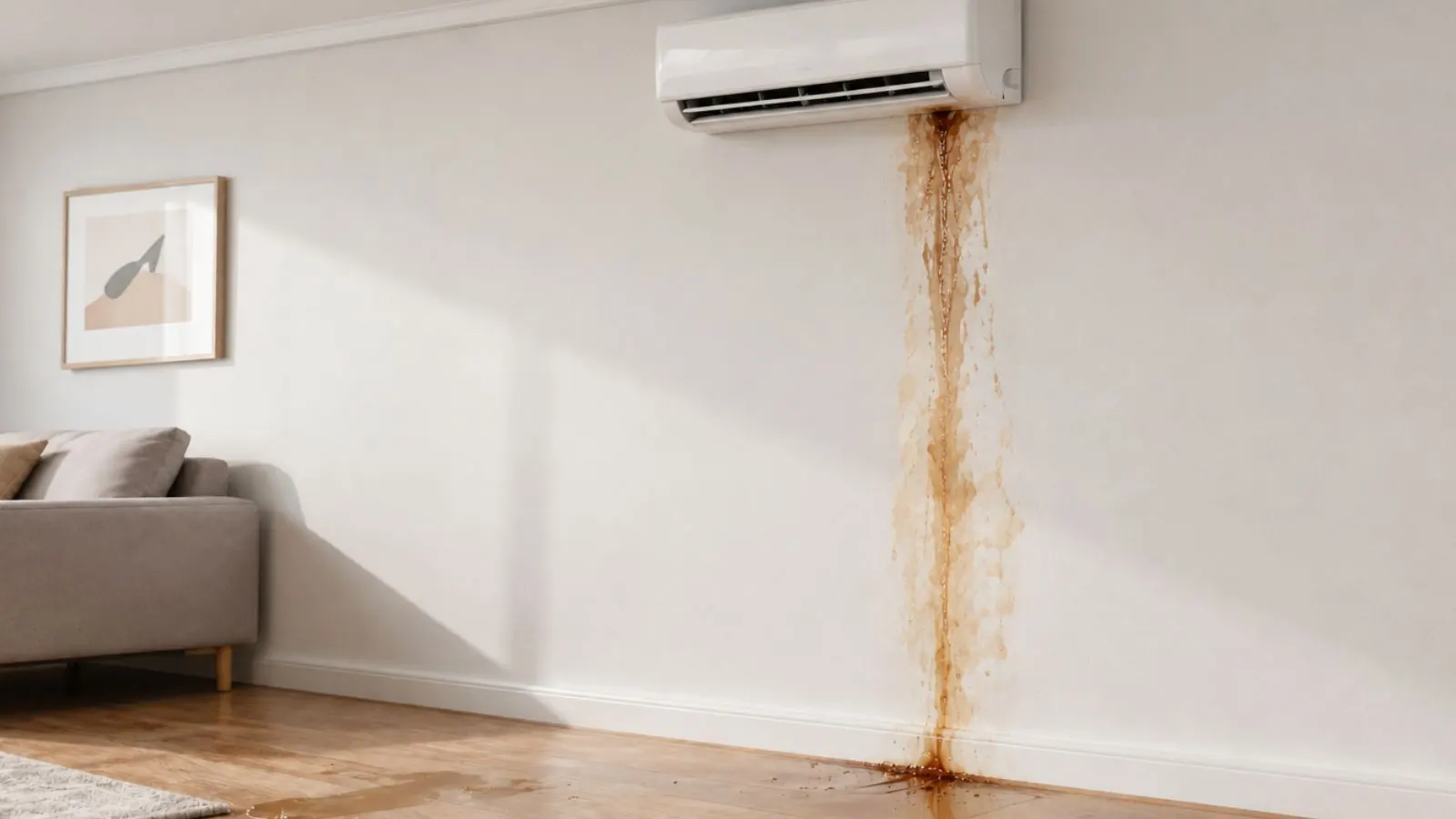
AC leak water damage repair begins when condensate from your air conditioner escapes its drain path and soaks the structure around the unit. Our 24/7 line is open, and a leak that has started is worth a call before the stain spreads.
While you wait, turn the system off at the thermostat so it stops making more water. If the unit sits in the attic, stay off wet ceilings below it and keep lights and fans in that room off if water is dripping through them.
How an air conditioner ends up leaking
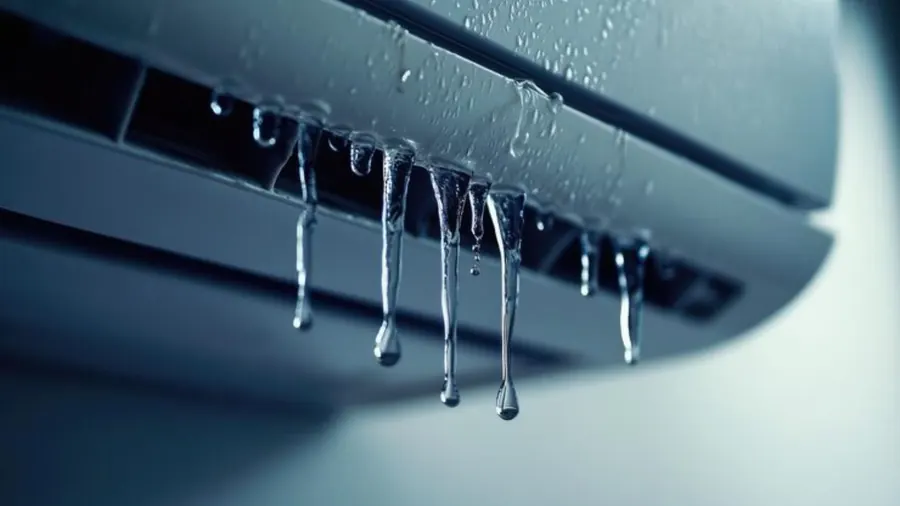
Cooling air removes moisture, and that moisture has to go somewhere. It collects on the evaporator coil, drips into a pan and leaves through a condensate drain line. When any part of that path fails, the water takes the next easiest route into your home.
In Addison, cooling systems can run for long stretches through the summer. That gives a partly clogged line plenty of time to back up. If your air handler sits in an attic or a closet, a small overflow can show up first as a ceiling stain or a damp closet wall.
Clogged condensate line
Algae, slime and dust build up in the line. Once it blocks, water fills the primary pan and then the secondary pan, if your system has one.
Frozen coil that thaws
Low airflow or a dirty filter can ice the coil. When it thaws, a burst of water can overwhelm the pan. The ice melts all at once, so the leak looks sudden.
What the drip, stain or smell is telling you
These signs help point to the source. A technician confirms the cause.
| Sign | Likely cause | Where water may be |
|---|---|---|
| Water on the floor of the furnace closet | Clogged line or full pan | Closet floor, wall base, flooring nearby |
| Brown ceiling stain below the attic unit | Overflowing pan or line failure | Ceiling board, insulation, framing |
| Ice on the coil, then a puddle | Frozen coil thawing | Pan, then surrounding materials |
| Musty smell near vents or the closet | Wet insulation or damp board | Closet walls and the cavity behind |
| Drip at the vent or register | Sweating duct or leaking connection | Ceiling or wall near the register |
First-hour safety steps
Work from the thermostat outward, and stay out of anything that looks unsafe.
- Turn the system to off at the thermostat, then switch off the unit's breaker or the disconnect near it.
- Do not touch wiring or the unit if you are standing in water, or if water is dripping near the electrical panel.
- Do not climb into a wet attic. Wet insulation and decking can give way, and attic heat adds its own risk.
- Call 911 for sparking, burning smells or smoke. Call the gas utility if a gas furnace shares the closet and you smell gas.
- Put a bucket or towels under active drips and take dated photos of the source and the stains.
Clean water that ages fast
Condensate starts as clean water, but it picks up dust and organic film from the coil and pan. That is why we handle it as clean water that ages fast. Left wet, insulation and board can start to smell within a short time, and the Texas Department of Insurance notes that mold can start growing within a day after a leak.
Air conditioner dripping inside? Mention where the unit is located.
☎ (972) 945-2885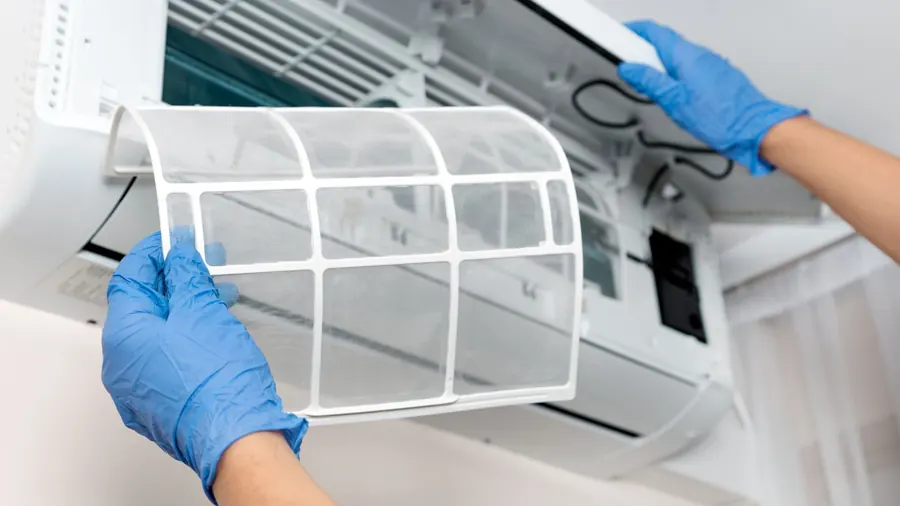
Our process for an AC leak
We follow industry practice under ANSI/IICRC S500, and we begin with readings.
- Map the moisture. A thermal camera and moisture meters show how far the water went through ceiling board, closet walls and flooring.
- Remove standing water. We extract pooled water from pans, closet floors and carpet with portable extractors.
- Take out what is soaked. Wet insulation and ceiling board that will not dry come out. We use flood cut tools only where the wall needs it.
- Dry the cavity. Air movers, LGR dehumidifiers and injectidry cavity drying work through the structure until readings reach a dry reference.
- Clean and record. HEPA air scrubbers help with dust during removal, and we document readings and photos for your insurer.
For the full rebuild after drying, see water damage repair. Longer drying jobs are explained under structural drying.
What changes the cost
The scope sets the work. These are the main factors.
Where the unit sits.
Attic jobs involve ceilings and insulation. Closet leaks stay lower.
How long it leaked.
A slow, repeated drip usually reaches more material.
Ceiling and wall area.
More wet board and insulation means more removal and drying.
Flooring type.
Carpet, laminate and hardwood each dry differently.
Equipment days.
Humid weather and thick materials lengthen drying.
Insurance and AC leaks
Policies differ, so ask your agent or adjuster. A sudden overflow or burst is often viewed differently from damage that built up over a long time. Maintenance problems can complicate a claim.
Photograph the pan, the drain line, the ceiling stain and any standing water. Save the HVAC technician's service note, since it names the cause. Our moisture logs show what was wet and when the drying ended.
What this means in Addison
Addison buys all its water from the City of Dallas, and the 2023 water quality report lists chloramines as the disinfectant. An AC leak, however, is condensate off your coil, not supply water, so it does not carry that disinfectant.
The Town's Development Services office requires permits for plumbing work like replacing water or sewer lines. Cosmetic work, such as painting and trim, does not need one. Drywall replacement is not spelled out, so ask Building Inspection.
Contractors working in Addison must register with the Town before starting a project, and permits and inspections run through the Citizen Self Service portal.
Source type: Town of Addison water quality report and Development Services
Prevention and mistakes to avoid
Most AC leaks are preventable with small habits.
- Ask your HVAC technician about a float switch that shuts the system off when the pan fills.
- Have the condensate line flushed on a schedule, and check the pan for standing water.
- Replace filters so the coil does not freeze.
- Do not ignore a stain, even a small one, or keep running a system that is dripping.
If a musty smell lingers after drying, see mold remediation. We serve homes in Richardson and Coppell as well. The HVAC technician repairs the unit. We do not.
Frequently asked questions
Yes. Dispatch is 24/7, including nights, weekends and holidays, with same-day response when available. While you wait, turn the system off, switch off its breaker if the area is dry, place a bucket under drips and take photos. Keep out of the attic.
Clearing the line stops new water, which matters. It does not remove what already soaked insulation, ceiling board or the closet floor. Hidden moisture keeps feeding odor and mold. An HVAC technician should clear the line. We then measure and dry what the water reached.
No. A stain means water has been in the board and likely the insulation above it. The stain may fade or darken, but the moisture stays until it is dried or the material is removed. We check with a thermal camera and meters before deciding.
It starts clean, but it can pick up dust and slime from the coil and pan. Handle it with gloves and wash your hands. We treat it as clean water that ages fast, so speed matters more than the water itself.
No. An HVAC technician repairs the unit, clears the line and installs a float switch. We extract, dry, clean, remove damaged material and document. Call both on the same day if you can, so the leak stops and the drying starts.
Ceiling stain under an air handler? The dispatcher can tell you what to do first.
☎ (972) 945-2885