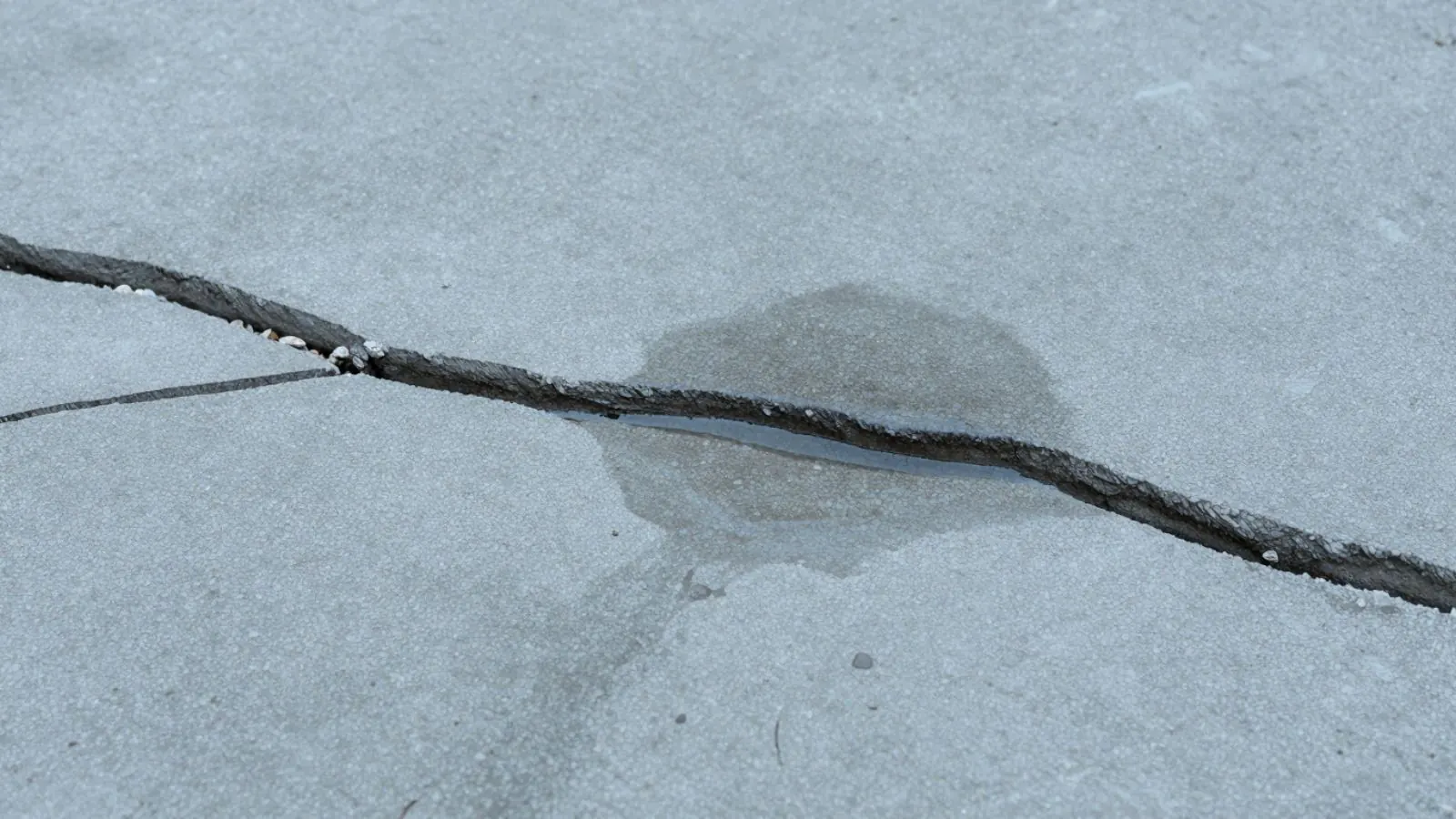
Slab leak water damage happens when a pressurized water line in or under a concrete slab leaks and the water works its way up into your home. Our 24/7 line is open, so call as soon as you suspect it.
While you wait, shut off the main water valve at the house and keep the leak from running. Stay off any floor that feels warm or soft, and keep power off at the breaker for wet rooms.
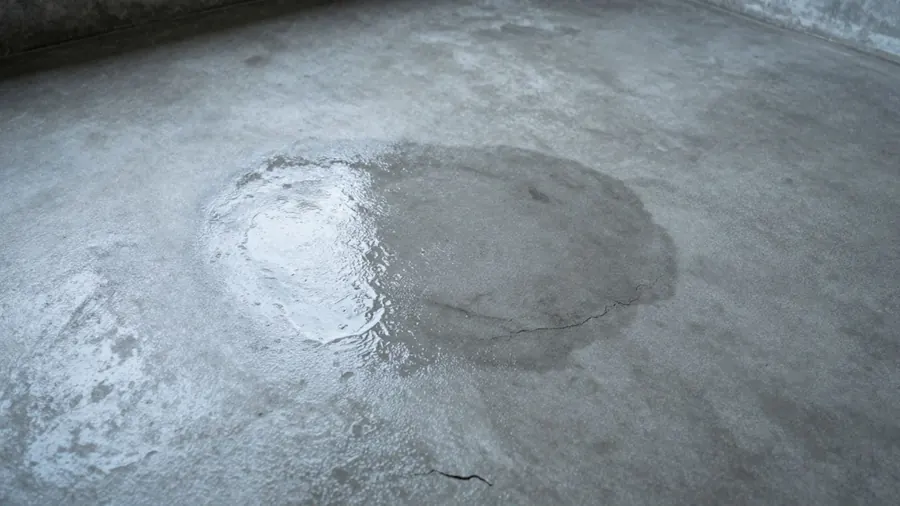
How a leak under the slab becomes water in your home
If your home sits on a concrete slab, supply lines can run through or beneath it. If one of those lines splits or a joint fails, water leaves under pressure. It cannot go down forever, so it finds seams, cracks and the edges of the slab and rises.
How common this is depends on the home, its plumbing and its age. We do not guess at that. What we can tell you is what the water does once it surfaces, because that is the part we handle.
Why it can run unseen
A hidden line leaks for days or weeks before anyone notices. By then flooring, baseboard and the bottom of drywall may be wet, and the water bill may have climbed.
Hot water lines
If the leaking line carries hot water, the floor above can feel warm in one spot. That is a clue to share with the plumber.
Signs of a slab leak and what they mean
No single sign proves it. Several together are worth a plumber's visit.
| What you notice | What it can mean | Water may be in |
|---|---|---|
| Warm spot on the floor | Leaking hot water line near the slab | Flooring and pad above it |
| Sound of running water with fixtures off | Pressurized line leaking | Slab edge and nearby walls |
| Damp carpet or baseboard | Water rising at a seam | Pad, tack strip, wall base |
| Lifting or cupping flooring | Moisture coming up from below | Subfloor or flooring glue line |
| Sudden jump in the water bill | Water running somewhere unseen | Anywhere along the line |
First-hour safety steps
Stop the water first, then deal with power.
- Turn off the main water valve. If it is stuck, call the Town of Addison rather than forcing the meter.
- Switch off breakers for any room with wet floors or wet outlets. Do not stand in water to reach the panel.
- Call 911 for sparking, shocks or a burning smell. Call the gas utility if you smell gas.
- Call a licensed plumber to locate the leak. We do not do leak detection or pipe repair.
- Lift small items off wet floors and take dated photos of every wet surface.
Who does what
A plumber finds the leak and repairs, reroutes or replaces the line. An engineer answers any question about the foundation. We handle the water: extraction, drying floors, walls, pad and cabinets, and documentation for your insurer. Doing the plumbing first and the drying right after is the quickest path to a dry home.
Floor wet from a slab leak? Describe any warm spots or damp baseboards.
☎ (972) 945-2885
Our process after a slab leak
We follow industry practice under ANSI/IICRC S500 and start by finding where the water went.
- Map it. Moisture meters and a thermal camera show how far water has traveled across the floor and up the walls.
- Extract. Portable and truck-mount extractors remove standing water and pull water out of wet carpet and pad.
- Remove what cannot dry. Saturated pad, damaged baseboard and wet drywall come out. Flood cut tools open the wall base where needed.
- Dry. Air movers, LGR dehumidifiers and cavity drying run until readings match a dry reference. Desiccant units help in cooler rooms.
- Clean and document. We clean affected areas and record readings, photos and notes for your adjuster.
Carpet decisions are covered under carpet water damage. If water spread through several rooms, see flood damage restoration.
What changes the cost
The scope drives the work, so these are the factors.
Rooms affected.
A leak that reached several rooms means more drying.
Flooring type.
Carpet, laminate, wood and tile react differently.
How long it ran.
A leak found late usually means more removal.
Cabinets and walls.
Water that reached cabinet bases or wall cavities adds work.
Drying days.
Thick materials and humid weather lengthen the equipment time.
Insurance and slab leaks
What a policy pays for depends on its wording, so read it with your agent. Coverage for a plumbing leak can depend on whether it was sudden or gradual, and on where the line failed. Do not assume anything until you read your policy.
Photograph every wet area before cleanup, keep the plumber's report and save water bills that show the jump. Our moisture readings give the adjuster a dated record of the damage.
What this means in Addison
The Town of Addison sends an operator for an emergency water turn-off, with Town crews available 24 hours. Meter shut-offs belong to an authorized agent of the Town, not the homeowner.
Development Services requires permits for plumbing work such as replacing water or sewer lines, and for foundation repairs. Contractors must register with the Town before starting, and permits and inspections run through the Citizen Self Service portal.
The Town adopted the 2024 International Plumbing Code with amendments for permits submitted on or after June 1, 2024. Ask your plumber to confirm that the permit is in place.
Source type: Town of Addison utilities page and Development Services Building Safety
Mistakes to avoid
A few choices make a slab leak worse.
- Waiting for the floor to dry on its own.
- Running the water to test the leak.
- Pulling up flooring before photographing it.
- Assuming a foundation problem when no engineer has said so.
Neighbors in Plano and Carrollton often call us the same way. Once water is out, we can set the drying plan around the plumber's schedule.
Frequently asked questions
Yes. You can call at any hour, including weekends, and same-day response is offered when available. While you wait, shut off the main water valve, switch off breakers for wet rooms, call a plumber and photograph the damage. Keep family and pets off wet floors.
No. A licensed plumber does leak detection and repair or rerouting. We handle the water the leak released: extraction, drying, removal of damaged material and documentation. Calling both early saves time, since drying cannot be finished until the line stops leaking.
Warm floor spots, running water sounds with fixtures off, damp flooring in more than one place and a jump in the water bill all point toward it. A plumber confirms with testing. A burst hose or a leaking fixture is usually visible at the source.
Drying protects them. Wet materials left alone can swell, warp or grow mold. We dry in place where we can and remove only what cannot recover. Your flooring type and how long it was wet decide what stays.
Not by itself. A leaking line is a plumbing problem, and a foundation concern is a question for a structural engineer. We do not do foundation repair. If you are unsure, ask the plumber what they found and whether an engineer should look.
Plumber still looking for the leak? Ask what can be dried in the meantime.
☎ (972) 945-2885