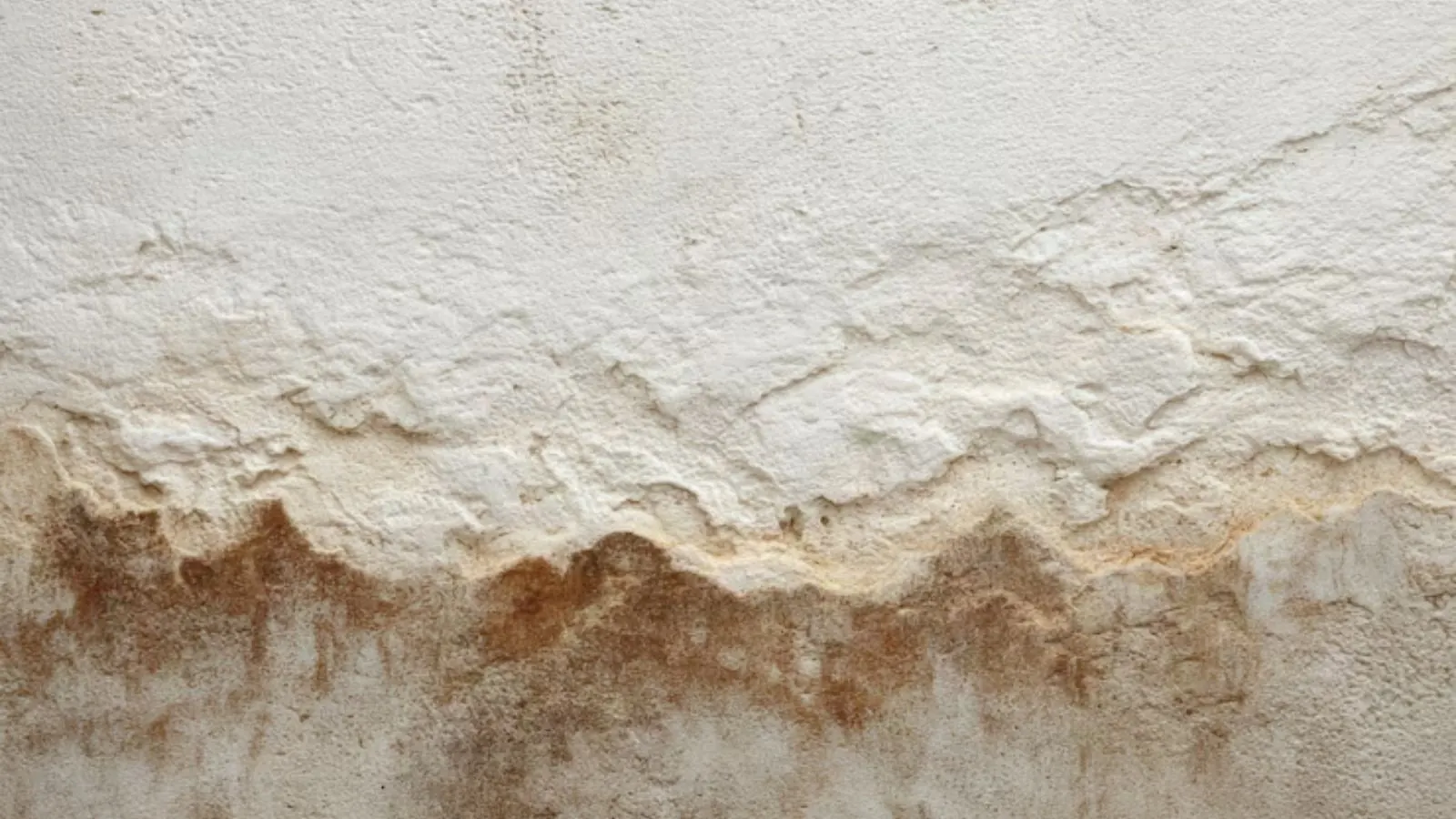
Drywall water damage happens when the paper face and gypsum core of a wall absorb water from a leak, storm or flood. Our 24/7 line is open, and we dispatch day or night, with same-day response when available.
While you wait, turn off the water source if you can, keep power off to the wet wall at the breaker, and do not poke, scrape or paint the wall. Move furniture and anything on the floor away from it.
Why drywall is so easy to damage
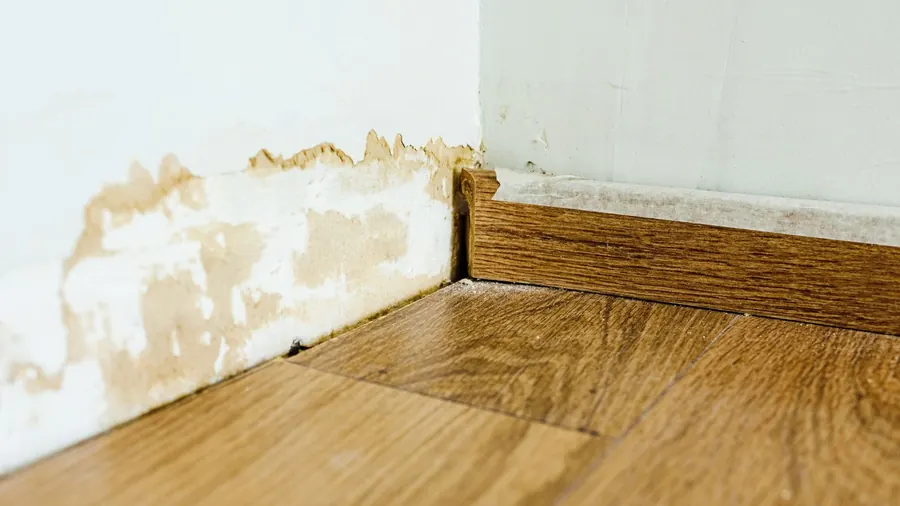
Drywall is a layer of gypsum between two sheets of paper. Paper pulls water upward like a wick, so the wet zone often climbs well above the visible line. A stain at 6 inches can mean damp board at 2 feet.
Behind the board sit studs, insulation and bottom plates. Water gets trapped there, out of sight. A wall that feels dry can still hold moisture in the cavity, which is why we measure instead of guessing.
How it happens around Addison
Walls get wet from supply line leaks, appliance failures, roof or window leaks, and water pushed in by storms. The National Weather Service in Fort Worth notes that severe weather, including large hail and damaging winds, occurs nearly every year across the metroplex. A wall under a failing window or beside a leaking water heater is a common place to look first.
What the wall shows and what it usually means
These signs help you decide how urgent the call is.
| What you see or feel | What it usually means |
|---|---|
| Bubbling or blistering paint | Water is behind the paint and the paper face is lifting |
| Soft or crumbly spot when pressed | The gypsum core has been wet long enough to lose strength |
| Brown or yellow stain | Water passed through and left residue, possibly repeatedly |
| Peeling tape at seams | Joint compound has been wet and let go |
| Swollen baseboard or wavy wall | Moisture has wicked into trim and board |
| Musty smell with a dry surface | The cavity is damp even though the face looks fine |
Safety steps before you touch a wet wall
- Stop the water at the fixture valve or the main shutoff.
- Turn off the breaker for any outlets or switches in the wet wall, and do not touch them with wet hands.
- Call 911 for sparking, a burning smell or a shock, and your gas utility for a gas odor.
- If your inside valve is stuck, call the Town of Addison for an emergency water shutoff. Only an authorized agent may work the meter.
- Do not cut into a wall near wiring or pipes before the power is off.
- If the wall is old, wear a mask and gloves before disturbing dust.
Dry in place or cut it out
Drywall that stayed wet briefly from clean water can often be dried in place. The core is still firm, the paper is intact, and readings come down with airflow and dehumidification. Board that is soft, sagging, stained from dirty water or wet for days usually will not recover.
When it must go, we make a flood cut. That is a clean horizontal cut made above the wicking line, so every damaged piece comes out and the studs behind it can dry. We cut higher than the visible stain, because stopping at the stain leaves wet board behind.
Our process for wet drywall
Industry practice under ANSI/IICRC S500 shapes how we sequence the work.
- Map the moisture. Moisture meters and a thermal camera show how high water has climbed and where the cavity is wet.
- Remove what is wet. We pull baseboards, take out wet insulation and make a flood cut where board cannot dry.
- Open the cavity. Open studs dry faster. Where we leave board in place, we use injectidry or cavity drying with small ports to push air behind it.
- Dry the room. Air movers and LGR dehumidifiers pull moisture out of the board and framing. Our water mitigation page explains why early drying limits loss.
- Clean and treat. We clean exposed framing and apply antimicrobial treatment where it fits. HEPA air scrubbers help with dust during cutting.
- Confirm dry and document. We check readings against a dry reference and record them with photos for your records.
Patching, taping, texturing, priming and painting come after drying. That rebuild phase is covered on our water damage repair page.
Wall soft or stained at the bottom? Describe how high the stain reaches.
☎ (972) 945-2885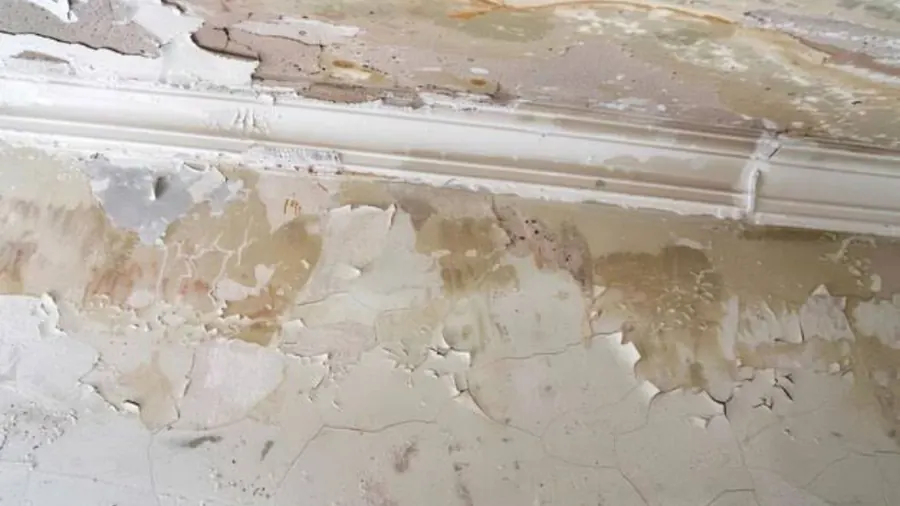
Sealing versus replacing, and finishing the wall
Sealing stained board with primer can hide a mark, but it does not dry a wet core. We only recommend sealing once readings show the board is dry and stable. Otherwise the stain returns or the paint fails again.
Replacement board is hung, taped and mudded in coats, then sanded. Matching the old texture takes care, and so does the final paint, which often needs a full wall edge to edge to avoid a visible patch.
What changes the cost of drywall water damage
The scope decides the price. These factors move it.
Wicking height
Higher wet lines mean larger cuts and more board to replace.
Water category
Dirty water means removal rather than drying in place.
Wall length and rooms
More walls and more rooms mean more labor and equipment.
Insulation and trim
Wet insulation, baseboards and cabinets against the wall add work.
Finish level
Textured walls, tile backing and custom paint take longer to match.
Drying duration
Equipment stays until readings reach a dry reference.
Insurance and wet walls
Policies differ, so ask your agent or adjuster how yours treats the cause. Insurers often separate sudden events, such as a burst supply line, from slow leaks that run for weeks. Flood is also handled separately from plumbing failures.
Photograph the wall, the stain edge and the source before we start, and keep any removed piece for your adjuster if asked. We log readings and removal lines to support the file.
What this means in Addison
The Town of Addison treats painting and wallpapering as cosmetic work with no permit. Replacing wall board is not spelled out on its list, so ask Building Inspection if you are unsure. Removing or adding walls does require a permit, and contractors must register with the Town before starting.
The Town also notes that permits and inspections run through its Citizen Self Service portal. If a plumbing repair caused the damage, that work may need its own permit.
Source type: Town of Addison Development Services (Building Safety)
Mistakes to avoid
- Painting over a bubbling wall before it is dry.
- Cutting at the stain line instead of above the wicking height.
- Skipping insulation inspection inside the cavity.
- Closing the wall before readings are confirmed dry.
- Assuming a dry surface means a dry wall.
If the wall stayed damp, mold can follow within days, so see our mold remediation page. We serve homes in Plano and Coppell as well.
Frequently asked questions
Yes. The line is staffed through the night and on weekends, and same-day response is offered when available. Call and tell us where the water came from and how much of the wall looks wet.
While you wait, stop the water source, keep power off to the wet wall and avoid pressing or scraping it.
Sometimes, if the water was clean and the exposure was short. A stained face does not tell you what the cavity holds, though. We check the board and framing with moisture meters before leaving anything in place, because trapped dampness can lead to mold and loose paint later.
Often higher than you can see. Paper wicks water upward, so the wet line can sit well above the stain. We measure the board with a moisture meter and cut above the highest wet reading, not at the visible mark.
The Town of Addison does not spell out wall board replacement on its permit list, so ask Building Inspection. Painting and wallpapering are cosmetic and need no permit. Removing or adding walls does need one.
Our part is moisture mapping, drying, cutting out wet board and documenting it. Rebuild work such as patching, texturing and paint belongs to the repair phase. We can point you to our repair page, or you can use a contractor of your choice.
Paint bubbling above the baseboard? Ask what a moisture reading would show.
☎ (972) 945-2885